Assessments from €49| Payment plans available
ADHD Assessment
€1,350
ADHD Assessment
€1,150
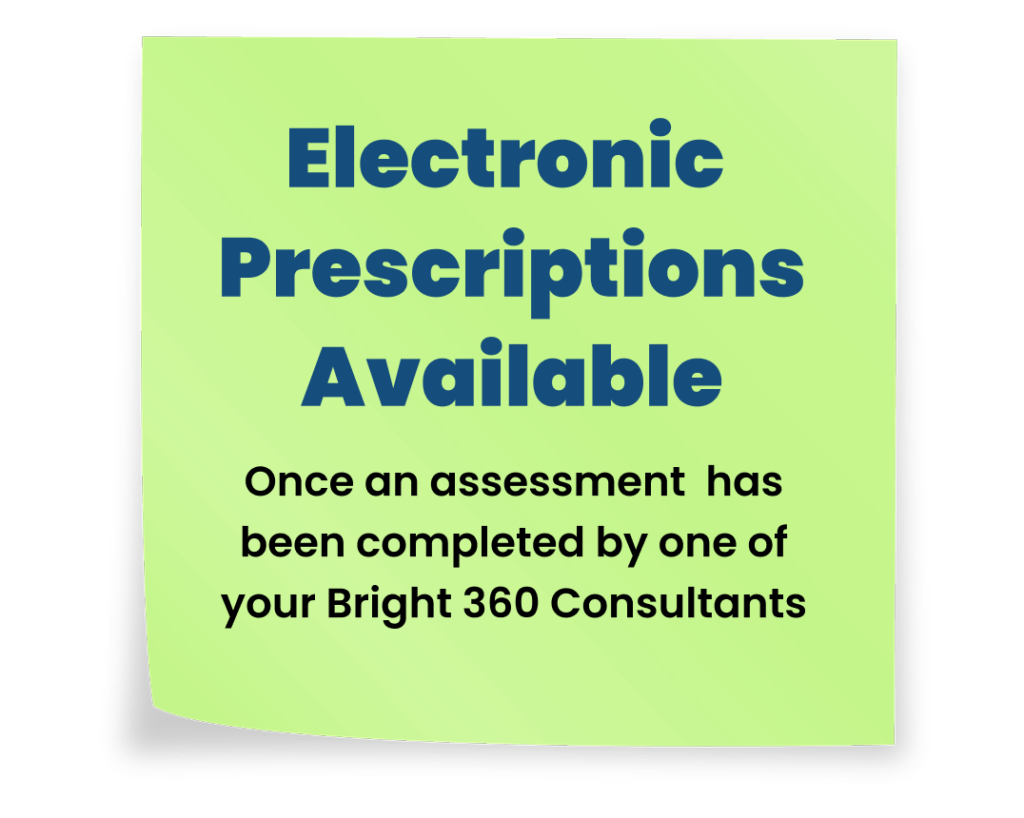
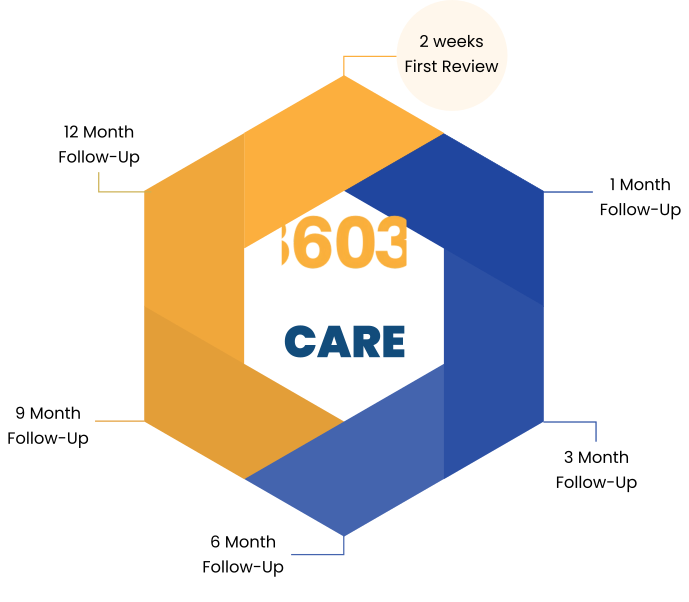
360 Care is our structured aftercare pathway designed to keep your ADHD treatment safe, supported, and consistent. If medication is prescribed, we can provide an electronic prescription (where clinically appropriate) and then review how you’re getting on at clear intervals—so you’re not left on your own or sent back to a long public waitlist for ongoing care. Every follow-up is planned, transparent, and focused on helping you find the right plan and keep it working long-term.
Each review/follow-up appointment is €95.
For kids, it can lead to better learning strategies, school accommodations, and improved behaviour management.
For adults, it can explain lifelong challenges and open doors to workplace support and mental health resources. Getting assessed is the first step toward a more manageable and fulfilling life.
An ADHD assessment can provide clarity, support, and access to the right
treatments for both children and adults.
If your recieve an ADHD diagnosis from a psychologist and wish to take medication, you may have to be re-diagnosed by a psychiatrist. You may not be able to use your psychologists report to acquire medication. Our model at Bright 360 allows our specialist psychiatrists to be the first point of contact with our patients while also collaborating and using the expertise our Clinical Psychologist on our Multidisciplinary Team to achieve better outcomes and continuity of care.
Both psychologists and psychiatrists can diagnose/identify and support ADHD, but only medical professions(i.e, psychiatry) can prescribe ADHD medication. Please click here to read our full article on the difference between psychologists and psychiatrists.
After years of wondering, I was very recently diagnosed with ADHD myself. That experience gave me a deeper understanding of the everyday challenges so many people face — whether it’s struggling to stay organised at work, managing focus in school, or balancing energy and routine in sport and fitness. I know firsthand what it’s like to search for clarity, and that’s a big part of why Bright 360 means so much to me.


ADHD (Attention-Deficit/
In Ireland, ADHD is recognised as a medical and psychological condition and is diagnosed using internationally accepted clinical standards.
It is not a behavioural problem or a personality trait — it is a brain-based condition that affects how people process information, manage focus, regulate emotions, and control impulses.
Irish references:
HSE (Health Service Executive)
ADHD symptoms typically fall into three core areas:
In adults, hyperactivity often appears as mental restlessness, racing thoughts, and internal pressure, rather than physical hyperactivity.
Important: ADHD symptoms must be persistent, impair daily functioning, and be present across multiple areas of life(e.g. work, home, education, relationships) to meet diagnostic criteria in Ireland.
ADHD does not have a single cause. Research shows it is mainly influenced by genetic and neurological factors.
Contributing factors include:
ADHD is not caused by:
These factors may worsen symptoms, but they do not cause ADHD itself.
Irish clinical position: ADHD is recognised as a biological neurodevelopmental condition, not a behavioural choice or lifestyle issue.
No. ADHD affects both children and adults.
Many people in Ireland reach adulthood without being diagnosed, especially those who:
Adult ADHD is formally recognised in Irish healthcare services and by:
ADHD is now widely understood as a lifelong condition, not something that only affects children.
Everyone gets distracted sometimes — ADHD is different because it is:
Persistent
Neurological
Present across settings
Functionally impairing
Not situational
Not willpower-based
ADHD affects:
A person with ADHD isn’t just distracted — their brain processes attention, motivation, and focus differently at a biological level.
Yes — in Ireland, ADHD can be legally recognised as a disability under the Equal Status Acts and Employment Equality Acts, when it substantially impacts daily functioning.
This means individuals with ADHD may be entitled to:
However, ADHD is also understood as a neurodevelopmental difference, and many people view it through a neurodiversity model, recognising both challenges and strengths.
Important distinction:
ADHD can be a legal disability, a medical diagnosis, and a neurodivergent condition — these are not mutually exclusive.