Aftercare

Your Journey,
Supported at Every Step

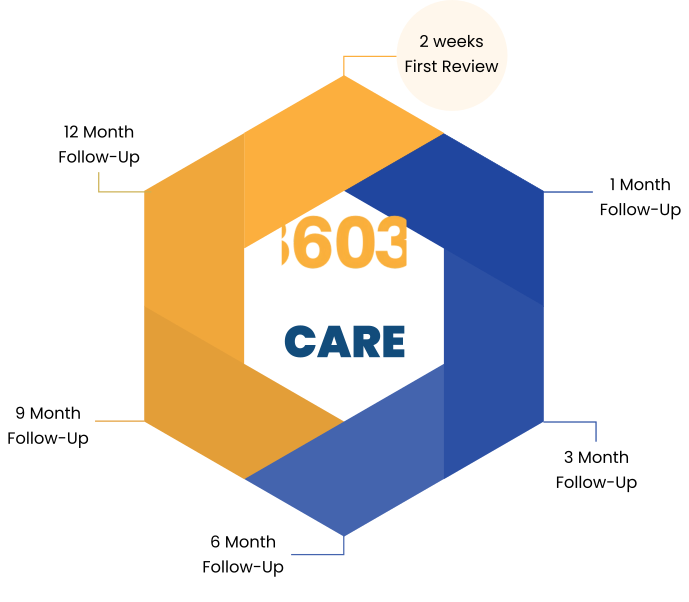
360 Care is our structured aftercare pathway designed to keep your ADHD treatment safe, supported, and consistent. If medication is prescribed, we can provide an electronic prescription (where clinically appropriate) and then review how you’re getting on at clear intervals—so you’re not left on your own or sent back to a long public waitlist for ongoing care. Every follow-up is planned, transparent, and focused on helping you find the right plan and keep it working long-term.

Each review/follow-up appointment is €95.

Bright 360 Care comprehensive aftercare program logo
VHI Healthcare logo
VHI members may be eligible for up to 500 reimbursement towards their  ADHD assessment with Bright 360.

Step 1 - Get Started (€49). 

Get Started (€49). 

Secure your assessment and begin the intake and developmental history process.

Step 2 - Before Video Consultation

Second payment before your video consultation. This payment confirms your appointment with our specialist consultant. Klarna can help by splitting payments into more manageable payments and can be used for step 2 and 3. 

The consultation will only proceed once this payment is completed.

Step 3 - Diagnosis & Report

The remaining balance is payable before the diagnosis and full written report are issued. Your consultant will discuss treatment plans, medical interventions, and next steps.

Already Diagnosed with ADHD? Continue Your Care with Bright 360

If you’ve previously been assessed by a consultant psychiatrist, we provide ongoing support including prescriptions, medication reviews, and structured treatment plans.

What This Service Includes

• Review of your existing ADHD diagnosis

• Medication initiation or continuation

•  Prescription management

• Regular follow-up consultations

• Personalised treatment planning

• Ongoing clinical support

Who This Is For

• Patients already diagnosed with ADHD by a specialist consultant 

• Individuals who cannot access timely follow-ups

• People seeking a more structured treatment plan

• Patients looking to transfer care from another provider

Important Requirement

To access this service, you must provide documentation of a prior ADHD diagnosis from a qualified consultant psychiatrist.

All diagnoses are reviewed by our clinical team. In some cases, a full reassessment may be required before prescribing.

Pricing Structure

• Initial Review Consultation: €250

• Follow-Up Appointments: €95

Frequently Asked Questions

What is ADHD?

ADHD (Attention-Deficit/Hyperactivity Disorder) is a neurodevelopmental condition that affects how the brain regulates attention, activity levels, and impulse control.

In Ireland, ADHD is recognised as a medical and psychological condition and is diagnosed using internationally accepted clinical standards.

It is not a behavioural problem or a personality trait — it is a brain-based condition that affects how people process information, manage focus, regulate emotions, and control impulses.

Irish references:

  • HSE (Health Service Executive)

ADHD symptoms typically fall into three core areas:

Inattention

  • – Difficulty focusing
  • – Poor concentration
  • – Forgetfulness
  • – Disorganisation
  • – Struggling to complete tasks
  • – Easily distracted

Hyperactivity

  • – Restlessness
  • – Constant movement or fidgeting
  • – Feeling internally “driven”
  • – Difficulty relaxing
  • – Feeling mentally overactive

Impulsivity

  • – Acting without thinking
  • – Interrupting others
  • – Difficulty waiting
  • – Making quick decisions without considering consequences
  • – Emotional impulsivity

In adults, hyperactivity often appears as mental restlessness, racing thoughts, and internal pressure, rather than physical hyperactivity.

Important: ADHD symptoms must be persistent, impair daily functioning, and be present across multiple areas of life(e.g. work, home, education, relationships) to meet diagnostic criteria in Ireland.

ADHD does not have a single cause. Research shows it is mainly influenced by genetic and neurological factors.

Contributing factors include:

  • – Genetics (ADHD commonly runs in families)
  • – Brain development differences
  • – Neurotransmitter regulation differences (dopamine and noradrenaline)
  • – Prenatal factors (e.g. pregnancy complications, exposure to substances)
  • – Early developmental influences

ADHD is not caused by:

  • – Poor parenting
  • – Diet
  • – Screen time
  • – Lack of discipline
  • – Trauma alone

These factors may worsen symptoms, but they do not cause ADHD itself.

Irish clinical position: ADHD is recognised as a biological neurodevelopmental condition, not a behavioural choice or lifestyle issue.

No. ADHD affects both children and adults.

Many people in Ireland reach adulthood without being diagnosed, especially those who:

  • – Did well academically
  • – Masked symptoms
  • – Were labelled as “lazy”, “disorganised”, or “anxious”
  • – Developed coping strategies
  • – Were misdiagnosed with anxiety or depression

Adult ADHD is formally recognised in Irish healthcare services and by:

  • – HSE
  • – Irish psychiatrists
  • – Medical Council of Ireland
  • – DSM-5-TR diagnostic standards

ADHD is now widely understood as a lifelong condition, not something that only affects children.

Everyone gets distracted sometimes — ADHD is different because it is:

✔ Persistent

✔ Neurological

✔ Present across settings

✔ Functionally impairing

✔ Not situational

✔ Not willpower-based

ADHD affects:

  • – Executive function
  • – Time perception
  • – Working memory
  • – Task initiation
  • – Emotional regulation
  • – Impulse control
  • – Motivation pathways in the brain

A person with ADHD isn’t just distracted — their brain processes attention, motivation, and focus differently at a biological level.

Yes — in Ireland, ADHD can be legally recognised as a disability under the Equal Status Acts and Employment Equality Acts, when it substantially impacts daily functioning.

This means individuals with ADHD may be entitled to:

  • – Workplace accommodations
  • – Educational supports
  • – Reasonable adjustments
  • – Legal protections against discrimination

However, ADHD is also understood as a neurodevelopmental difference, and many people view it through a neurodiversity model, recognising both challenges and strengths.

Important distinction:

ADHD can be a legal disability, a medical diagnosis, and a neurodivergent condition — these are not mutually exclusive.

Book today to receive your assessment form